

The Junior Golfer's Fitness Guide: 4 Physical Pillars for College-Bound Players
Most junior golf training focuses on the swing. The kids who actually make it to college rosters train the body underneath it.
Golf is misjudged as a leisurely sport, but the demands it places on a young player's body are real: flexibility, strength, balance, and endurance, all working together for hours at a time. As junior golf becomes more competitive, the players who treat fitness as part of their training (not an afterthought) are the ones who pull ahead.
Here are the four physical pillars every serious junior golfer should be building and why each one matters more than most parents realize.
Pillar 1: Flexibility and Mobility
A fluid, full-range golf swing depends on flexibility, particularly through the hips, shoulders, thoracic spine, and hamstrings. Junior players who skip mobility work tend to compensate with arm-only swings, which limits power and quietly increases injury risk over a long season.
What it looks like in practice:
10–15 minutes of dynamic stretching before every practice or round
Targeted hip openers and shoulder mobility drills 3–4 times per week
A foam roller for tight muscle groups after long sessions
A focused training environment like our overnight junior golf camp in Mainebuilds this in by default, every session starts with proper warm-up, so the habit becomes second nature.
Pillar 2: Strength Training
Distance comes from rotational power, not arm strength. That means junior golfers need to build the right kind of strength, core stability, glute and leg power, and rotational force generation.
What it looks like in practice:
Core work (planks, dead bugs, anti-rotation drills) 3 times per week
Lower-body strength (squats, lunges, single-leg work) 2 times per week
Light medicine-ball rotational throws for power transfer
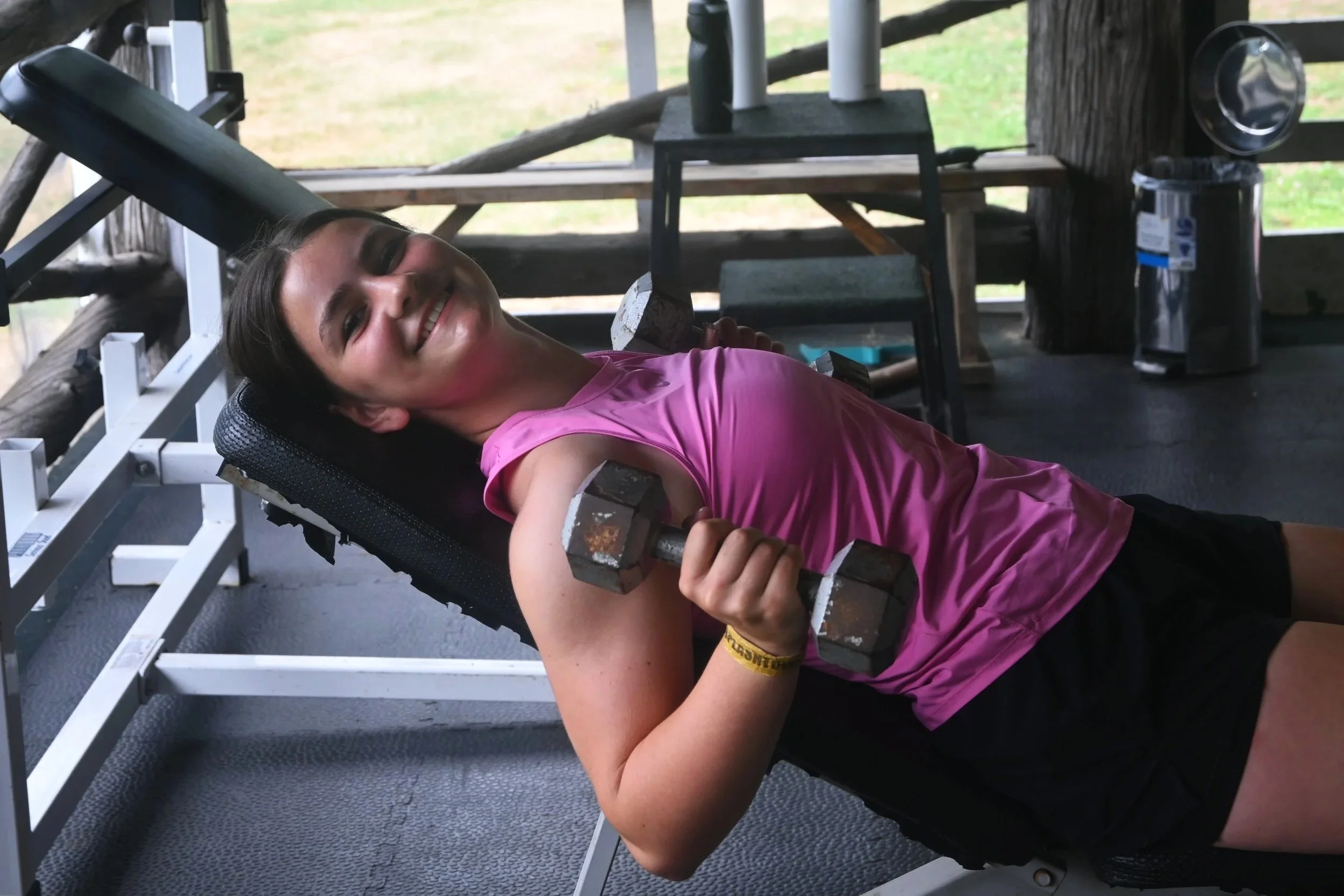
Important caveat: Junior golfers shouldn't lift heavy. The goal at this age isn't bodybuilding, it's building movement patterns that transfer directly into the swing. Tailored strength training is one of the things our level-based golf instruction at NEGTC integrates alongside on-course coaching.
Pillar 3: Balance and Stability
Every golf shot is executed from a single, stable platform. If a junior golfer's balance breaks down even slightly, the entire swing breaks down with it. Balance also tends to be the first thing to go when fatigue sets in over 18 holes, which is why college coaches notice it immediately.
What it looks like in practice:
Single-leg balance drills (eyes open, eyes closed)
Stability exercises on uneven surfaces (BOSU ball, foam pad)
Practicing swings off uneven lies on the course itself
This is one of those areas where 10 minutes a day yields outsized returns. It's also one of the easiest to neglect.
Pillar 4: Endurance
Golf doesn't look cardiovascular until you're walking 18 holes for the fourth day in a row at a tournament. The mental focus required to play well is directly tied to physical stamina. Tired bodies make tired decisions, and tired decisions blow up scorecards.
What it looks like in practice:
30–45 minutes of moderate cardio 3 times per week (running, cycling, swimming)
Walking practice rounds instead of riding
Building tournament endurance gradually, multi-day junior events are great for this
The path from junior golf to college-ready play is built on more than swing mechanics. It's built on a body capable of executing those mechanics repeatedly, under pressure, at the end of a long round. The juniors who prioritize physical fitness early aren't just better golfers; they're more durable ones, less likely to plateau or break down as the competition rises.
If you'd like to see how a focused summer at NEGTC builds both technical skill and physical conditioning into one program, request our program guide.